Two articles are shown in this edition: One from William Enright and one from Magdi el Masry.
William Enright
This summary is very much my account of the trip, and I take full responsibility for what follows.
I am a new diver. I completed my PADI Open Water at Wraysbury in October 2025, a course which included a dry suit qualification because I kept screaming like an infant every time I entered the lake in a wet suit.
Since then, I have dived again at Wraysbury in clouds of silt, tested my compass work at Stoney Cove with Vince, and had one shore dive with iDive on the Rosalie. 22 dives in all including the PADI training open water dives. Thus, the scene is set.
The information provided by Paul, trip organiser, was excellent. I knew where to go and the arrangements for the boat and accommodation and fun out of the water. I had arranged to give Alistair a lift as he was coming over from Paris. Magdi was keen to come, and we managed to squeeze him in the car somehow. As a learning point for new divers here; it’s not the mount of kit that you bring with you that counts, it’s having the stuff that you know and understand. My one bag seemed something of a token offering but I had all I needed, mostly.
Day one:
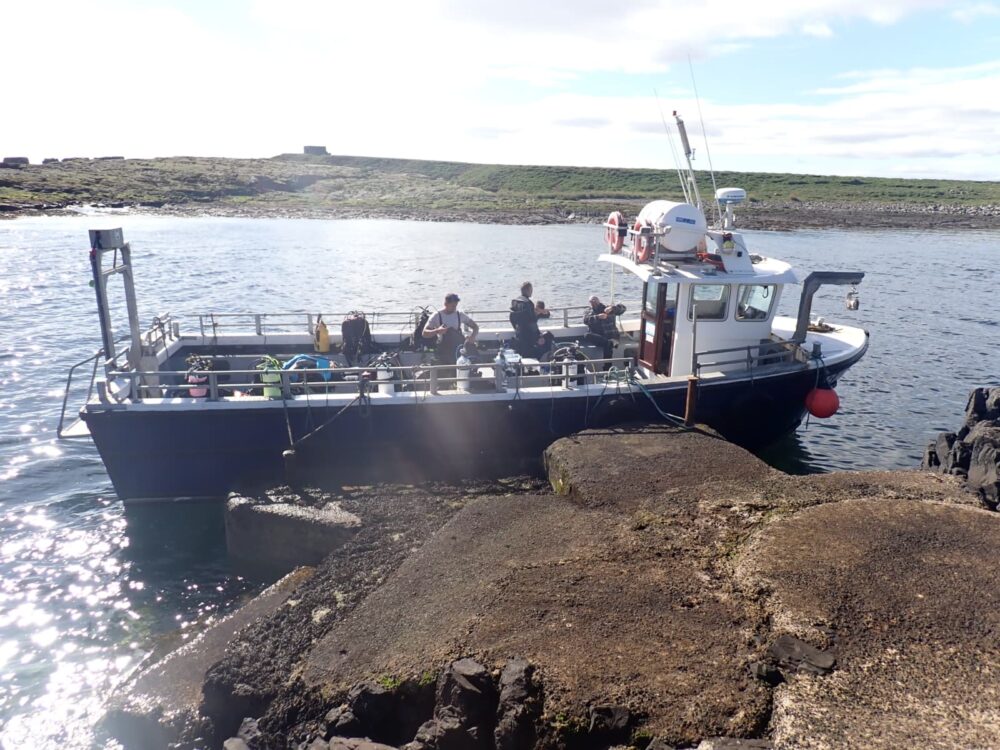
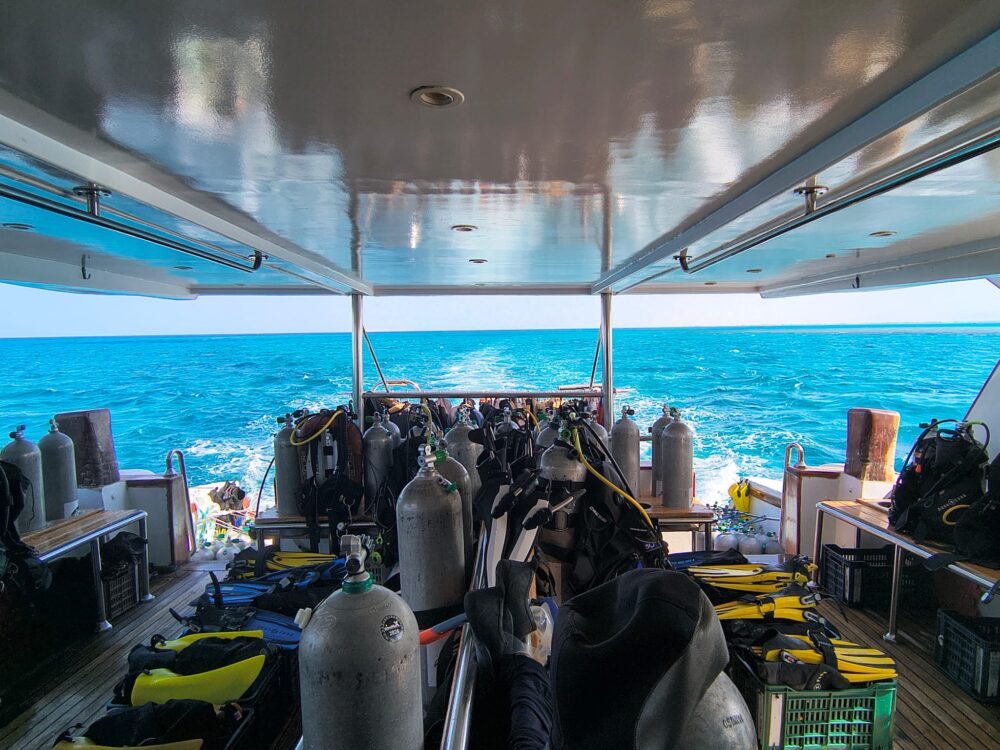
Up early and the wind is blowing from the west quite hard, whipping up white horse and a short sea with not much of a swell. We had one of Billy Shields boats to ourselves that day, with a crew who looked about 14 years old but that’s most people to me these days. The crossing to our first dive site, Longstone End, wasn’t too bad for me, old sea dog that I am and took maybe 25 minutes. The skipper explained that this was a great site for a dive and that the weather and tide would probably not make it accessible later in the weekend so best to do it today.
The boats are excellent, and the crew very helpful. With just us 7 on board we had space for Magdi’s kit. You step into the water with a straddle off the rear lift platform and I was buddied-up with Paul this time around. Surface drift/fin to the rocks that rise a few metres out of the sea at the top of a wall.
Now, on the shore dive I had added weight to account for saltwater density and dived ok. What I knew at the back of my mind was that extra layers under the dry suit today would mean I was more buoyant. Shame the front of my mind ignored this and try as Paul and I might there was no way I was descending.
The effort of trying to dive was exhausting. Truly I was knackered but needed to go back to the boat. The vessel was now standing off the rocks about 11 miles away (actually a 100 yards) and could see we needed to return but they could not approach too close as the wind was driving them down onto the Longstones themselves. Well, I’m 69 and not totally unfit, in fact the biological age machine at the gym says that one of my legs is in its 40’s, but the swim back was proving beyond my stamina. You can’t suck all the air you need in via your regulator when you are trying to breathe like Lance Armstrong on a mountain stage of the Tour de France without his drug support. Temptation, take it out and suck more air. Don’t! It only lets water into your mouth and its salty.
I think the lesson here was, it’s OK to bob up and down in your BCD on the surface and relax a bit, stay with your buddy, you can’t come to much harm.
Anyway, back on board using the amazing boat lift I eventually got my breath back. On the same dive there were two equipment learning points which showed not only that I should have thought about weights but that for others testing kit before using it is a great idea. Top marks go to Ian and Magdi who were having a lovely dive, Alan, Alistair and Paul for showing how it should be done.
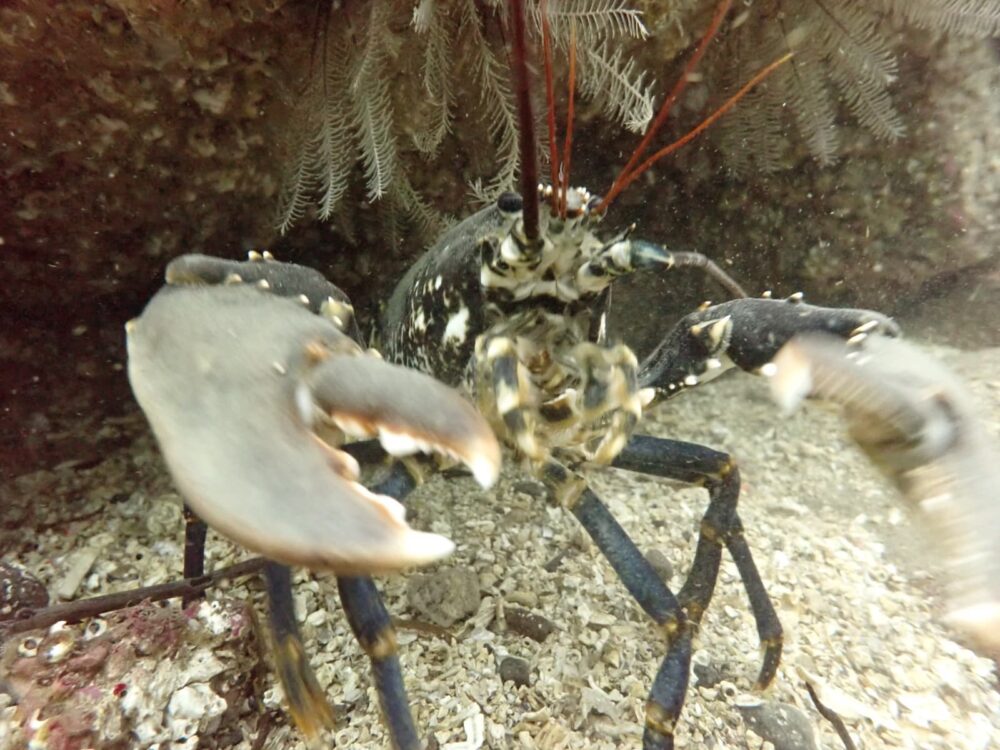
Later the same day after a quiet lunch in the close lee of some rocks, we went to The Hopper. With 4 extra kg (yes 4!) I followed Paul along the wall and into a gully. We saw seals, they saw us and swam off, after a young one demonstrated how things under water should be done. The day ended in success.
On the boat you secure your tank to the rails with short bit of rope and the tanks for use are stowed together to stop them rolling around. You put your bags on the engine hatch covers which are raised in the middle of the deck. It’s all easy to sort and swapping tanks isn’t too hard. All the kitting up, un kitting (kitting down?) (editor’s note: ‘de-kitting’) and sorting out is a joint effort but someone will always help. Oh, and the deck hand whips your fins off as you get to the top on the lift so you can walk onto the deck ok.
Day two: (with a much more mature looking boat crew)
The wreck of the St Andrey and the Pinnacles. This time Alan drew the short straw and got me as his buddy. Fortunately, he knew I had form as he had ‘helped’ me at Stoney Cove with a couple of the stones in the BCD. (I’m a slow learner, Ok?). Cracking dive with some depth progression for me.
We shared the boat this time, but it still had plenty of room and everyone is helpful and friendly, and you get to check out the diving kit that other people have spent thousands on. Oh, yes, I should mention that the Amazon delivery for more dive stuff for Magdi hadn’t arrived yet.
The tanks were refilled by the boat company overnight and everyone seems to have 210 bar when you ask them. The dives are recorded formally by the club, so you get to note air before and after, depth and dive time for the log. Buddy checks are done and the boat crew were impressed as apparently these sometimes get skipped. Don’t be tempted as its very important after kitting up that you understand you are not still tied to the ships rail, you have your weight belt on and that your Dry Suit inflation hose is on properly. (this wasn’t all me, just in case you are thinking that).
More lunch and then back to the Hopper as the wind was still quite strong from the west and the seas were white horse territory. I got to the point where we were going to descend and then got cramp in both thighs. Alan towed me back to the boat and then went off to dive with competent people. Lessons: (1) there are no gym machines that replicate ‘finning’. (2) Bananas are recommended by boat skipper as anti-cramp measures. (3) hydration is a good idea.
Day Three: (very windy)
As we headed out to the Big Harca I was looking at the lady who was with a group from Edinburgh who were sharing the boat. She probably should have taken sea sickness tablets earlier. It was rolling like a so and so, as we now had swell and waves from the consistent westerly wind.
Ian was the unlucky one today but by now I had my weights sorted, my banana eaten and even a high-tech powder sachet consumed, provided by Magdi, no cramp for me!
Ian had told me that he likes to explore the nooks and crannies of the dive and we had a terrific time dandering around without any issues. Lots of sea life around us and I behaved myself. I’m picking up tips as I go from these chaps it seems, slowly making it all seem easier with more head space for enjoying what I’m seeing.
Post lunch and with the weather still a bit pants, it was back to the St Andrey and the Pinnacles which now seemed more familiar, and it was easier to get orientated as to which way was which and the dive boat skippers briefings start to make sense. Keep the wall to your right and its to the west of you, head south and don’t go east as the tide is quite strong there etc.
The ride back was wet, lots of spray, and the boat was moving around so you have to make sure you keep one hand for yourself, but someone will always grab your elbow or offer you a free had if you want to move to the loo or sort your kit.
Todays learning point was that the dry suit lube I had purchased was just jelly like water and useless. Jollop seems far, far better (I’m not being paid to say that).
Also, take a spare ‘O’ ring or two and you don’t have to blag one off anyone to help your first stage seal to your tank.
Magdi’s new dry suit arrived, and we had a photo of a green bin where the rest of more new kit had been left. He searched quite a bit of Northumberland to no success which I was glad about given the car packing situation.
Had a Curry.
Day 4: (was set to be a stunner)
By this stage I’m getting confident. Kit onto boat, gear set up and lashed down, big dry coat for the sea conditions and its 25 degrees and flat calm. Brilliant.
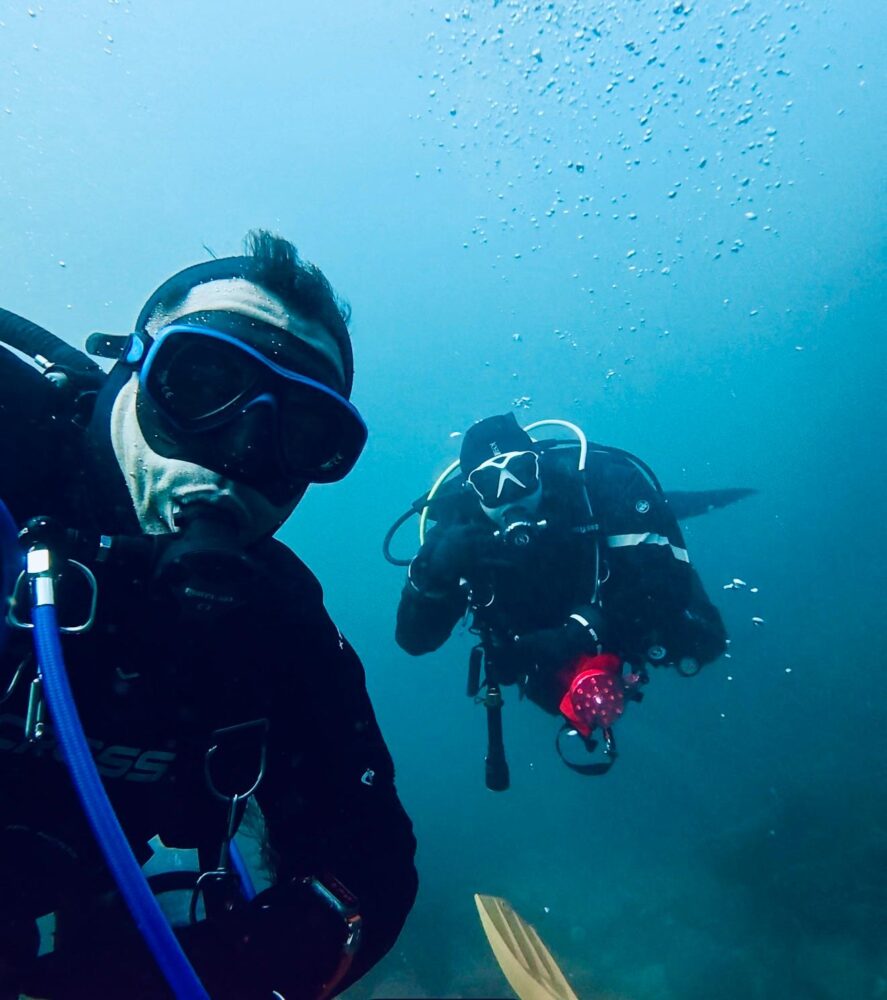
First dive, Crumstone. I tried to apply what I was learning. Control your descent with your buoyancy and your position in the water, think skydiver. You can always get to the bottom and rest there and sort your gear out, even re tighten your weight belt, get your torch from your pocket, check your computer, light a Woodbine etc (editor’s note: that’s showing your age). Take a moment or two to look around and get settled. Chatting to the group and watching people it turns out I wasn’t the only one who was breathing a bit hard before stepping off the boat, with a bit of exertion kitting up and the excitement of the dive. It seems its natural and ok and you can take as much time as you like and don’t say you are ready to descend until you are, no one minds.
Lunch, idyllic, laying against a mooring on one of the islands watching the wildlife and chatting stuff through.
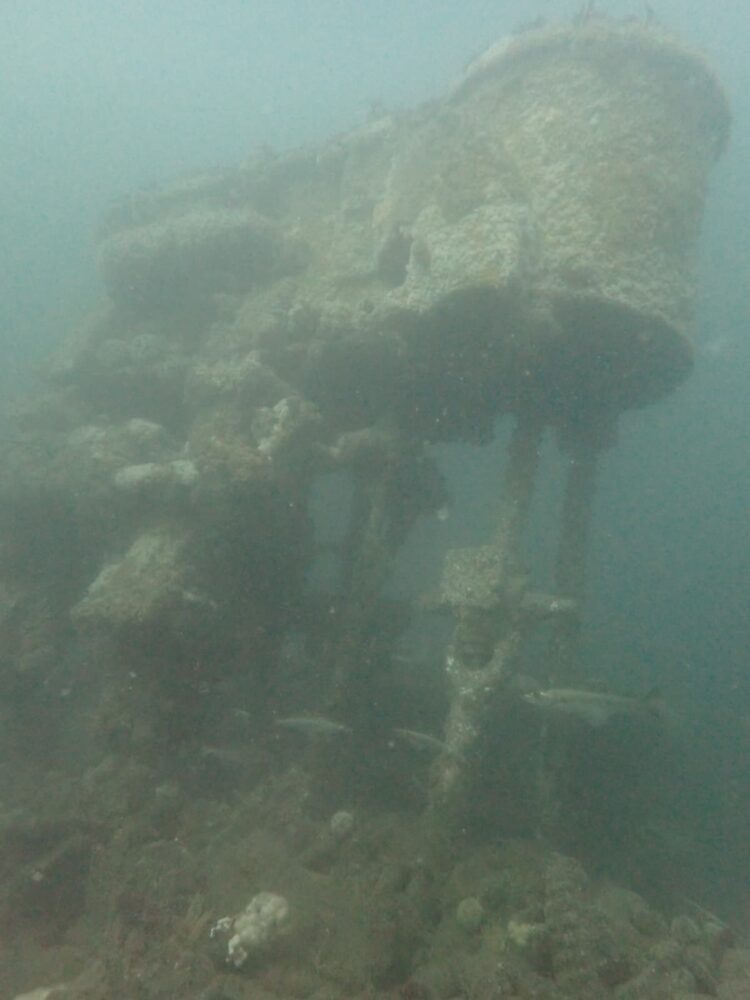
Last dive and by far and away the best I have done so far EVER. Whirl Rocks and the Jan Van Ryswyk wreck. Well, I nearly spat my regulator out when we got off the 6m plateau and saw the dive site. I felt like I was flying in slow motion along beautiful canyons and above the remains of a tragic loss. Just a magnificent site with so much to absorb and a new depth progression for me towards Advanced Ocean.
A great trip with everyone mucking in and helping with the chores and best of all, despite my beginner status, second hand gear, one bag and no jollop, lack of weight and cramp I had a blinding time and learnt a huge amount from some top blokes.
I’ll be back.
Magdi el Masry
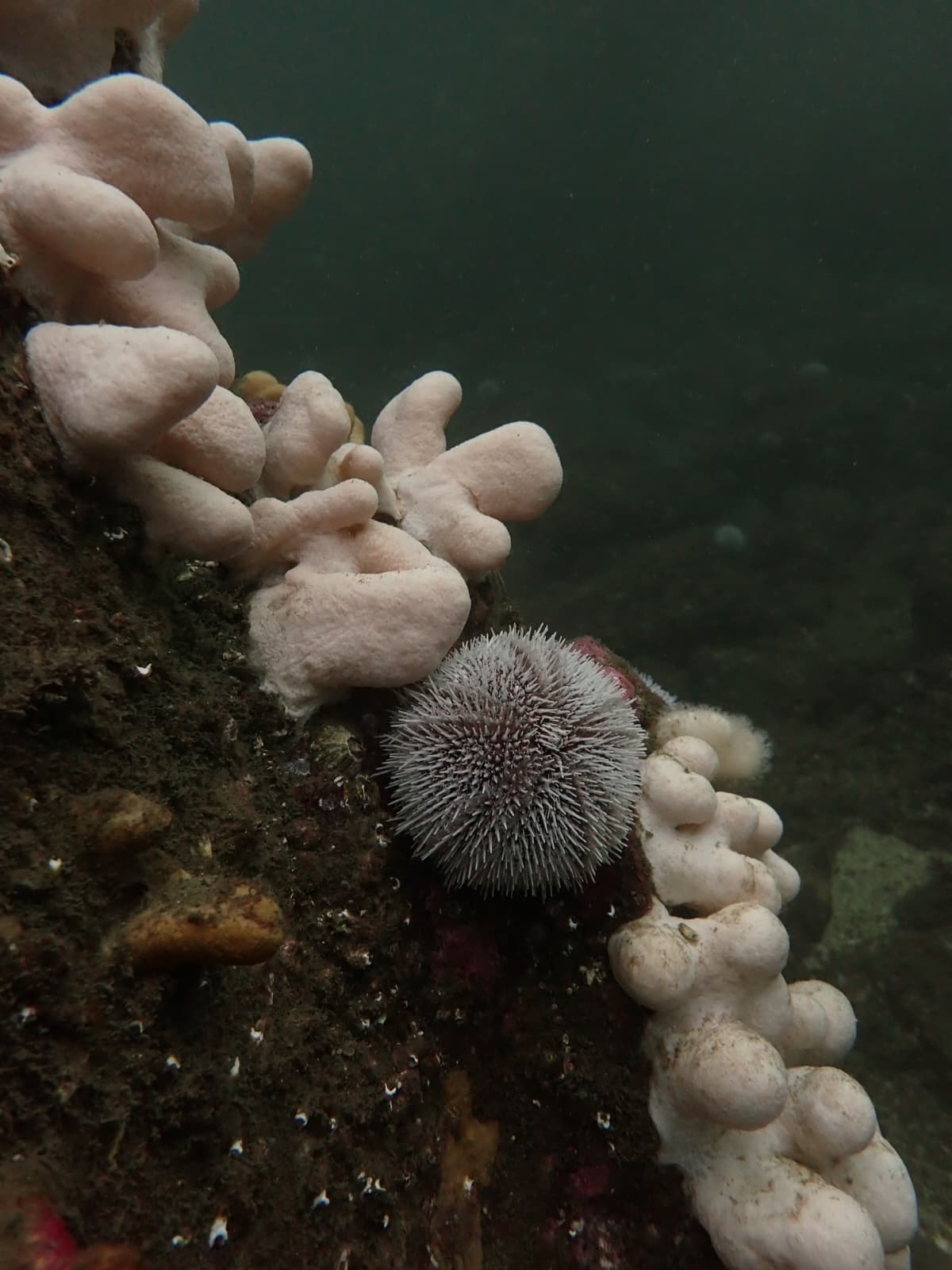
This was my first ever UK North Sea diving trip, and I was genuinely blown away by it. I’d gone in expecting little more than rocks, sand and stones, but couldn’t have been more wrong. The sheer amount of life, colour and interaction underwater completely took me by surprise. I was even greeted by a seal on my very first dive (when my camera was in my pocket, of course!). The final dive at Whirl Rocks and the Jan Van Ryswyk wreck was particularly spectacular and a brilliant way to finish the trip.
I’d only joined iDive around two months ago and was a last-minute addition to the trip, but everyone went out of their way to squeeze me in and help transport my gear. A special thanks to Ian Cross, who managed to get me drysuit certified the weekend before so I could come along, to at least make it through the weekend without hypothermia.
Having done a fair bit of diving abroad, I’ve found dive centres can be a bit hit and miss. Some are fantastic, while others rush you through and make you feel like you’re just another booking. There was absolutely none of that here. The whole trip was well organised, the dives were well planned, and I felt safe and welcome throughout. Everyone mucked in, whether it was helping each other kit up, shopping, morning coffees or cleaning up afterwards. The boat crew were brilliant too — incredibly helpful and good fun. The diving, the people, and the whole experience exceeded my expectations all round. I’ll definitely be back and joining as many trips as I can with the club.